The Different Levels of Thoughts and Beliefs in Cognitive Behavioural Therapy (CBT)

Cognitive Behavioural Therapy (CBT) isn’t just about spotting individual negative thoughts and challenging them. It goes deeper, helping you understand the underlying beliefs and assumptions that shape your thinking. This approach can lead to lasting, effective change.
In CBT, our thoughts and beliefs are often understood in layers:
Automatic Thoughts
Rules for Living
Core Beliefs
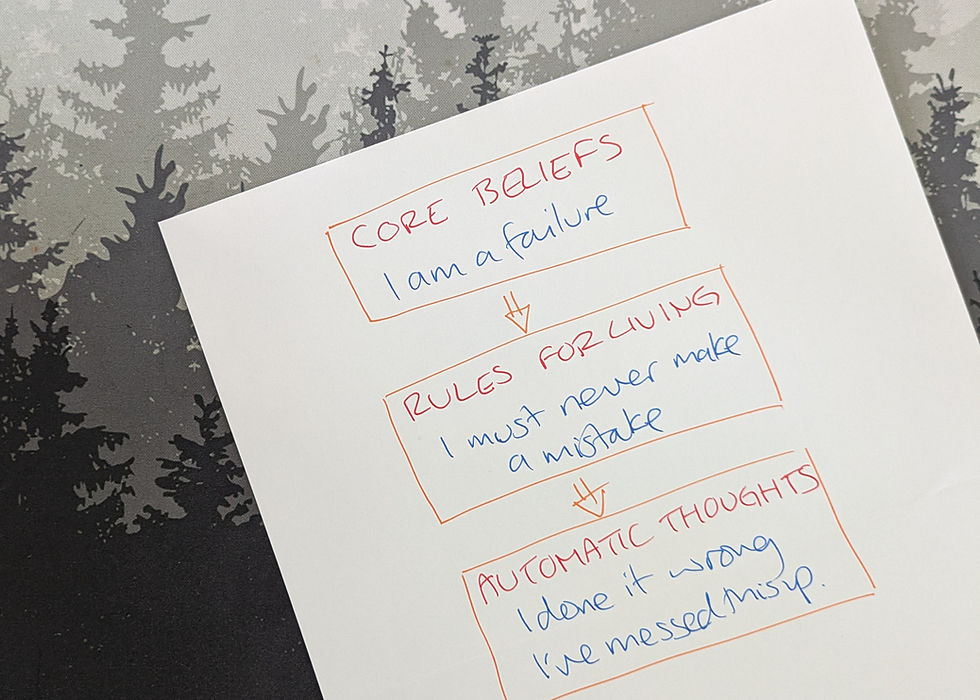
What Are the Different Layers of Thoughts and Beliefs?
Automatic Thoughts
These are the quick, surface-level thoughts that pop into your mind throughout the day. They can unhelpful and self-critical, such as:
“They don’t like me.”
“I look really weird.”
“I’ve done it wrong.”
“I can’t cope with this.”
“What if I’m late?”
Rules for Living
Rules for Living are the guidelines we follow to cope with life, and to protect ourselves from our core beliefs being activated. They can be helpful, but sometimes are too rigid. Examples include:
“I must keep everyone happy.”
“I can never make a mistake.”
“I must always be prepared for anything.”
Core Beliefs
Core Beliefs are deep, often rigid beliefs we hold about ourselves. They are usually formed early in life and can be negative, such as:
“I am unlovable.”
“I am not good enough.”
“I am a failure.”
How Do Thoughts and Beliefs Connect?
Our early experiences shape how we see ourselves, others, and the world. As children, we try to make sense of situations with limited understanding. This can mean we take things personally, even when it's not about us, and is not our responsibility.
If we grow up in challenging or difficult environments, this can lead to Core Beliefs like:
“I’m not good enough.”
“I am a failure.”
Living with these beliefs constantly activated can be overwhelming. This is where Rules for Living come in. They help us feel safer, maintain control, and sometimes produce positive outcomes; like working hard to achieve success or being kind to keep others happy.
However, Rules for Living can become too rigid. We may feel we must follow them all the time or face a “catastrophe.” Inevitably, we break them, which can trigger Core Beliefs, increase anxiety, and fuels negative automatic thoughts.
How Can CBT Help?
CBT works on all levels of thoughts and beliefs:
Automatic Thoughts: Learn to challenge, balance, or dismiss unhelpful chatter.
Rules for Living: Make them more flexible, practical, and less fear-driven.
Core Beliefs: Explore ways to soften rigid beliefs, helping them feel less black and white.
By working on these layers, CBT can help you feel calmer, more confident, and in control of your thoughts and emotions.
Will CBT Work for Me?
Whether you’re seeking CBT in Norfolk or online therapy across the UK, I offer a friendly, confidential space to explore these changes.
Book a free introductory call to talk about your needs and whether CBT could be a good fit for you.


Comments